

We analyze the DeepL Spring Launch 2026 and the shift toward "Language as Infrastructure." Learn how specialized AI models are outperforming general LLMs by focusing on intent, culture, and precision.
The Invisible Tax of Language Barriers
In any high-stakes, multi-million dollar strategy meeting, almost 35% of the time spent in that room is completely wasted. Just gone. It is not wasted on bad ideas or office politics. It is wasted on sheer misunderstanding, which is a staggering leakage of human potential if you really think about it. Zoom out from the boardroom for a second. Look at your frontline teams, the people running the actual physical core of your business, the ones operating the machinery and keeping the lights on. They are only comprehending 60% of critical safety or operational briefings. That is the invisible tax of language barriers in the modern global economy. And if you are running a business right now, you are paying that tax every single day, whether you see the line item or not. We look at supply chain bottlenecks and software inefficiencies, but we completely ignore this cognitive friction. It happens every single time a localized team has to decipher a directive from global headquarters, right under our noses.

Paradigm Shift & The Cost of Friction
Today on Locanucu, Localization News You Can Use, we are unpacking the DeepL Spring Launch 2026. What we are seeing in the industry is a massive paradigm shift. We are analyzing how artificial intelligence is transitioning language from a painful, manual choke-point into an invisible, real-time operating system for a borderless business.
Let's ground this in the reality of our current landscape. If you look at the macro data, nearly 70% of US businesses are facing daily, tangible disruptions simply due to language barriers. I am talking about lost enterprise sales, botched customer support escalations, and delayed product rollouts. But the most sobering metric I am tracking for you is that 60% of organizations are actually delaying their global expansion entirely because of it. They just stop. They look at a lucrative new market in Asia or Europe, decide they simply cannot handle the communication friction, leave millions on the table, and walk away. I feel that friction personally. Years ago, I was trying to secure a last-minute train ticket in Berlin using an early translation tool, and due to a massive algorithmic hallucination, I accidentally booked a freight shipping container instead of a passenger seat. Funny on a backpacking trip, sure. But catastrophic if you are trying to negotiate a corporate merger.

Flawed Models vs. Infrastructure
So, if the stakes are this incredibly high for the enterprise, why are we still treating translation like an afterthought? For decades, the localization industry has relied on one of two severely flawed models.
First, the outdated manual translation workflow. You draft a document, send it to an LSP, wait two to three weeks, pay a premium, and blindly hope it comes back retaining your brand's intent. Or, you rely on the second, far more insidious model, forcing the entire global company to default to English. If you manage remote teams, you know this pain. You have brilliant engineers who happen to be non-native speakers, and they just hold back. It marginalizes their ideas simply because they don't possess the sheer combative fluency to debate aggressively in a second language.
This is where the concept of language as an infrastructure fundamentally changes the game. A modern enterprise would never try to build its own private electrical grid, so why duct-tape communication protocols across borders using fragmented apps? Language needs to function like the electrical wiring in the walls. You plug your appliance in, the lights come on, and you don't even think about the current traveling through the copper. When language transitions to a foundational operating system, the two ultimate currencies you trade in are precision and trust. Without precision, you cause dangerous errors. And without trust in the output, your workforce simply abandons the tool.
The Generative AI Hurdle
Now, we have had generative AI practically writing novels for years. So why has it struggled with this specific language bottleneck until right now? The hurdle hasn't been dictionary definitions. Traditional LLMs, which are essentially statistical engines guessing the next most likely chunk of a word based on a massive, unfiltered ocean of internet data, struggle heavily with intent. Language is weighted by tone, deep cultural context, and unspoken assumptions. A literal translation of a hesitant "we will consider it" in Mandarin might map to an absolute, binding "yes" in English if the AI model lacks the architectural weighting to understand the cultural padding around the phrase. To build true language infrastructure, the AI has to preserve tone, style, and intent with unprecedented fidelity.
Let's look under the hood of the DeepL language AI platform. In blind, head-to-head tests against the absolute biggest generative players, Google Translate, ChatGPT, Gemini, this purpose-built platform achieved a 96% win rate. And a win means professional, native-speaking human evaluators chose this platform's output 96% of the time for accuracy, fluency, and intent. It achieves this through high-fidelity neural networks trained exclusively on highly curated, high-quality human translation. It is a specialized tool for a specialized job.

The Customization Hub & Workflow
The real operational shift happens in the AI-first translation workflow and the Customization Hub. Think of the Hub as installing a localized corporate brain directly into your tech stack. It utilizes three main architectural components.
Your hard-coded terminology database ensuring proprietary acronyms are translated exactly the same way every time.
These are dynamic, they store previously approved human-reviewed sentences. If you translate a complex liability disclaimer once, the memory maps it, and your team never pays to translate that exact string again.
Enforces brand tone across specific endpoints automatically.
Let me invent a scenario to show how this works. Imagine you are a major global healthcare provider pushing an urgent software patch for your remote patient monitoring system. The update involves highly specific terminology about heart rate variability. You write the copy in English. When you push this through your CMS, your customized Spanish style profile automatically kicks in. It acts as a logic gate. It forces the formal "usted" instead of the informal "tú" to comply with strict medical communication standards, it completely ignores standard capitalization on your branded terms, and it perfectly translates those complex cardiac concepts using your Glossary. It does this in three seconds, entirely eliminating the manual handoffs and the psychological dread of context switching.

Smart Segments & Confidence
Now, you might be wondering about rigidity. Do these profiles become a straightjacket? The answer is dynamic contextual weighting. You use modular profiles, your legal endpoint calls a completely different style profile than your social media endpoint. And what about AI hallucinations? The fatal flaw of older machine translation was the black-box effect. This new platform provides a transparent algorithmic confidence level. The system measures token probability and entropy, meaning mathematical confusion when the model sees too many possible meanings. If it encounters ambiguity, it flags the text in what they call "Smart Segments." The AI essentially says, "I am 99.9% confident, but page 12 has high entropy. Please review." You only spend your expensive human capital where it is strictly analytically necessary.
DeepL Voice
And that just solves the written word. Dealing with live acoustic inputs, accents, background noise, varying cadences, brings us to DeepL Voice. The landscape completely shifts here with Voice for Meetings, Voice for Conversations, and the Voice API. Voice for Meetings gives you virtual collaboration with near-zero latency. Picture a multinational architectural firm coordinating a massive stadium build. You have structural engineers in Milan, materials experts in Seoul, and project managers in Chicago. In the old world, the Italian engineer hesitates in broken English, and the nuance of why a specific steel truss might buckle gets lost. In the new world, the Italian speaks rapid-fire technical Italian, the developer speaks Korean, and the Chicago team hears or reads it instantly in English. Pure expertise talking to pure expertise.
Then you have Voice for Conversations, which pushes this into the messy physical world via frictionless QR code access with no app downloads. Think about an active chemical manufacturing plant going through a high-stakes safety audit. It is a deafeningly loud environment. You have a German auditor speaking rapidly into a headset, while the technicians on the floor speak a mix of Hindi, Polish, and English. A miscommunication means a toxic spill. They just scan a QR code on the auditor's badge, and despite the roar of the machinery, they get live, noise-filtered, translated audio and captions in their native languages. It completely democratizes operational safety.
And finally, the Voice API embeds this directly into developer infrastructure. Imagine a frustrated enterprise client in Mexico experiencing a catastrophic data breach. They call support, but your absolute best cybersecurity forensic analyst is based in Sweden and only speaks Swedish. Normally, these two would never connect. But embed the API into Zendesk or Twilio, and the Mexican client explains the breach in Spanish, the analyst diagnoses it in Swedish, and the client hears flawless Spanish in real-time. The ticket is closed in minutes, and you build immeasurable customer loyalty.

Boardroom Metrics & Security
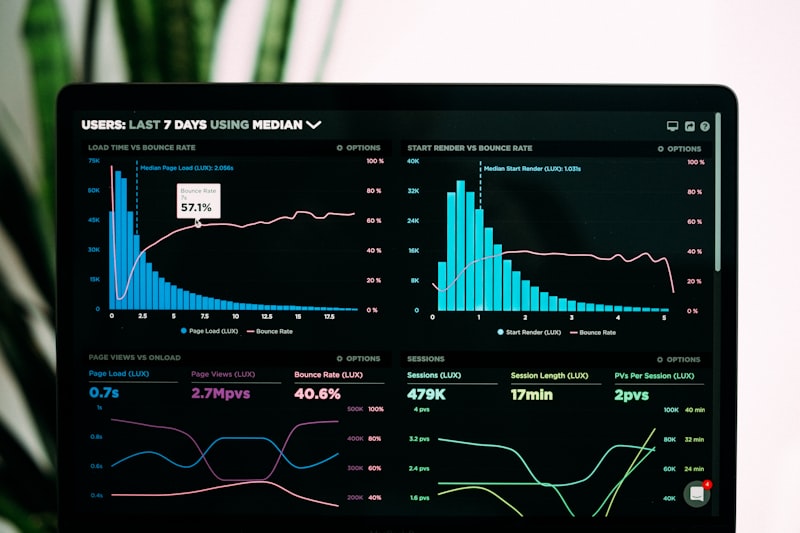
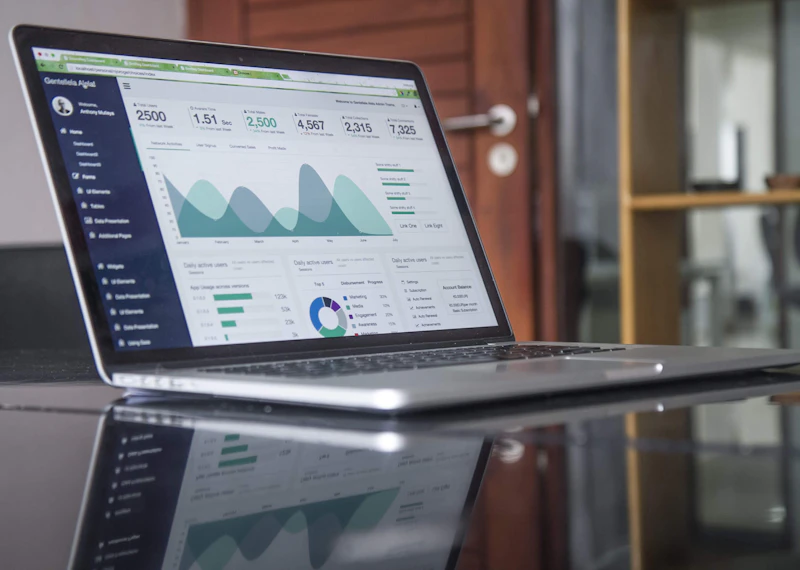
When you look at the boardroom metrics, the ROI is staggering. Global law firm Taylor Wessing reported a $1.8 million annual operational gain simply from cutting out translation friction. At Nagashima Ohno, lawyers are reclaiming up to a full day of work every week. And Eppendorf is saving hundreds of thousands by eliminating external vendor costs. But beyond cost, it's about enterprise risk management and security. A major Japanese pharma company uses this for clinical supply chain decisions. How? Through ephemeral processing. The text is translated and instantly deleted from the servers. It is never used to train public models, turning a massive compliance risk into a secure tool for expansion. You track all of this via a live analytics dashboard, spotting exact cost savings and efficiency bottlenecks in real-time.
We see this applied in the partnership with Notion. Over 80% of Notion's users are outside the US. The silent killer of productivity is context switching, copying text, pasting into a translator, copying back. By natively embedding custom translation agents directly into Notion's interface, that labyrinth vanishes. People no longer filter themselves, they express highly abstract ideas in their native language, and the AI handles the bridge.
Final Takeaways
To summarize our foresight for you this quarter: Language as an infrastructure completely rewires your operational architecture. We are moving from sluggish, localized workflows to instantaneous, API-driven fluency. The implementation of specific style profiles and TMs ensures complete brand safety and precision, while features like Smart Segments respect your human capital by only flagging genuine ambiguities. On the audio front, zero-latency meeting translation and API-embedded customer support mean you no longer hire based on the geographic limitation of language, you hire purely for technical expertise and empathy.
And this was your industry update from Locanucu, Localization News You Can Use.

Key Terms Explorer
Click the flashcard to flip and reveal the definition. Use the buttons to navigate through the key terminology.
Term
Click to flip
Definition
Comprehensive Assessment
Test your knowledge on the DeepL Spring Launch 2026. This assessment consists of 50 questions.
